CRITICAL REFLECTIONS on the CINEMA of the GOTHIC

Mildred Pierce (Todd Haynes, 2011)
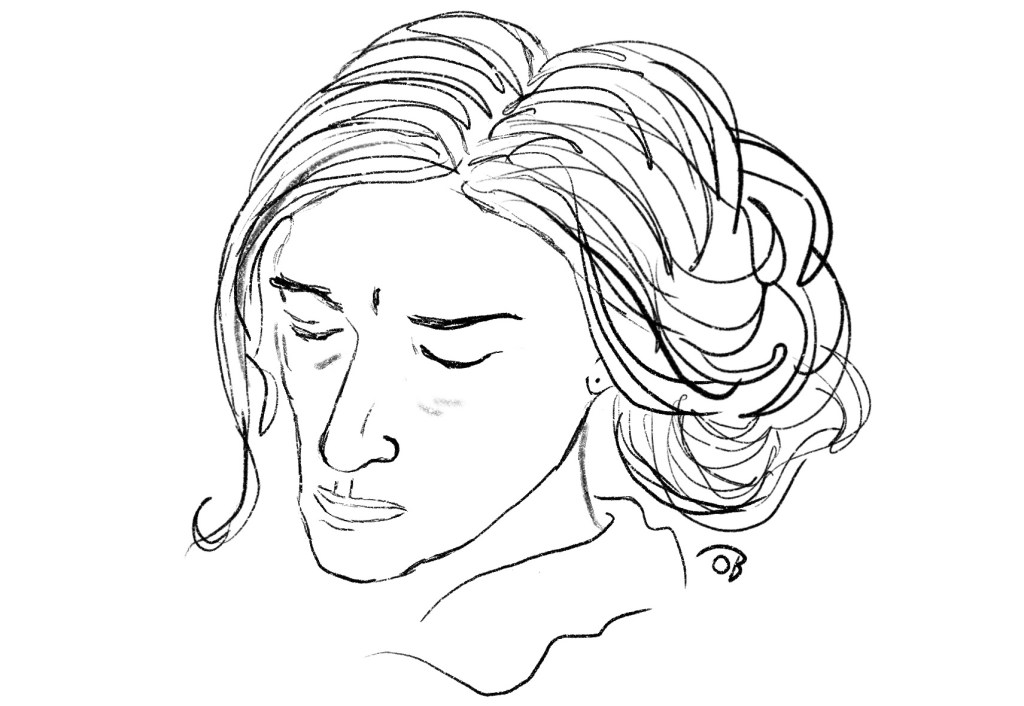
It all comes down to her squint. In James Cain’s 1941 novel, he describes it this way:
Into her eyes, if she were provoked, or made fun of, or puzzled, there came a squint that was anything but alluring, that betrayed a rather appalling literal-mindedness, or matter-of-factness, or whatever it might be called, but that hinted, nevertheless, at something more than complete vacuity inside. It was the squint, Bert confessed afterwards, that first caught his fancy, and convinced him there was ‘something to her.’1
Two screen actors have attempted to embody this squint in the more than eighty years since the novel’s publication: Joan Crawford, who won an Oscar for her performance in Michael Curtiz’s 1945 film noir treatment, and Kate Winslet, whose performance in Todd Haynes’s five-part miniseries, in 2011, surpasses any she has given before or since. (Watching Winslet play the great grass widow of American literature, I had the sense that her entire career, from Heavenly Creatures [1994] to the latest James Cameron, has been ancillary to the squinting, driven contradiction of Mildred Pierce.)
It’s all about the eyes with Mildred, though not necessarily about clear sightedness. After all, what lies most immediately in her line of sight is furthest from recognition: not the industrious growth of her entrepreneurship from the ruin of Depression-era penury but the monomaniacal fixation with her sang-froid narcissist first-born daughter, Veda. Cain records it best, with a plainness of detail notable for its deviation from the noir-stylized first-person prose of The Postman Always Rings Twice (1934) and Double Indemnity (1936), when Mildred uses a pair of opera glasses to take a closer look at a Veda-turned-coloratura-soprano during the latter’s triumphant concert at the Hollywood Bowl:
Up close, she could see the wan, stagey look that Veda turned on the audience, and the sharp, cold look that she constantly shot at Mr. Treviso, particularly when there was a break, and she was waiting to come in. It shattered illusion for Mildred. She preferred to remain at a distance, to enjoy this child as she seemed, rather than as she was.2
“She preferred to remain at a distance.” No need for glasses — I prefer to squint. For all the emphasis on musicality and musicianship in both the novel and its author’s life — recall that Cain’s career in letters was a fallback position for a failed career as a singer — Mildred Pierce is governed by visuality. But it’s a broken, distanced visuality bent upon untenable desires and dreams. The irony of Mildred’s surname (Pierce as in “a piercing gaze”) is that no matter how hard she squints, she will not see. The novel, Cain’s first major foray into straight literary realism, is structured by a dysfunctional, deficit-laden economy of dreams. Todd Haynes luxuriates in that realism even as, perhaps inevitably after his supreme accomplishment in Douglas Sirk-pastiche, Far from Heaven (2005), he revivifies the latent melodramatic energies of Cain’s novel. But where Curtiz was intent — due to studio pressure — on transforming Mildred Pierce into a more feminocentric version of Double Indemnity or Postman, Haynes drops Warner Bros.’ tacked-on murder plot and beckons us instead to fixate on all the details Mildred only selectively observes, right down to server tip disputes, restaurant order slips, itemized bills, and each button, fold, and zipper of the work uniforms adorning and uncovering the bodies that populate Mildred’s Great-Depression milieu. Likewise, he luxuriates in Cain’s dialogue with a degree of fidelity that is just shy of neurotic.
Surprisingly, given his roots as an NQC darling, Haynes offers only a glimpse of the incestuous dimension of Mildred’s affection for Veda (Evan Rachel Wood), the jealousy that attaches not to her second husband, the loafing-yet-penniless playboy Monty Beragon (Guy Pearce), when she discovers near the novel’s close that he is sleeping with Veda, but to the daughter herself. Such an overbearing cathexis is a hard thing indeed to depict, for what are we to make of a bereaved mother who “inhales” the scent of her pre-pubescent daughter on the night her younger sister dies, and finds “a little more than peace”?3
There was something unnatural, a little unhealthy, about the way she inhaled Veda’s smell as she dedicated the rest of her life to this child who had been spared, as she resolved that the restaurant must open today, as advertised, and that it must not fail.4
And what to make of Veda, who, though not a murderer, exhibits a sociopathic streak to rival that of Phyllis Nerdlinger in Double Indemnity, the deadliest of noir’s femmes fatales? Veda’s scheming brutality is all the more striking because it’s directed not at some concupiscent insurance salesman, but the woman who granted her life and nurtured her ambition. It’s as though the core of the relationship between mother and daughter is displaced between genres, and what survives the transition to social realism is a psycho-sexual schism connecting Cain’s noir to its Gothic predecessors: Poe (of “The Fall of the House of Usher”), Melville (of Pierre; or, The Ambiguities), Lewis (of The Monk), and Coleridge (of Christabel). Such generic displacements are of course part and parcel of the history of realism and naturalism in fiction, especially that of nineteenth-century Britain and France. Dickens, Eliot, Hardy, and Zola are full of such incongruous Gothic pockets, and in the later rise of noir, debts and references double back upon themselves (Zola’s breakthrough novel, Thérèse Raquin (1867), is widely-noted as a source for the plot of Cain’s Postman, a novel equally indebted to the murder trial of Ruth Snyder, which Cain personally reported on during his career as a journalist).
We all love Mildred Pierce because she is driven and willful and confounding; because she embodies both rugged individualism and its unviability; because she is so perverse and only willing to see so much; and because, like her, we find ourselves surrounded by history-as-material-process on all sides. We will never know quite what to make of Mildred, and that is why she is probably Cain’s — and Haynes’s — finest accomplishment. Desire is an irreducible problem, and it provokes a squint.
Frankenstein (Guillermo del Toro, 2025)
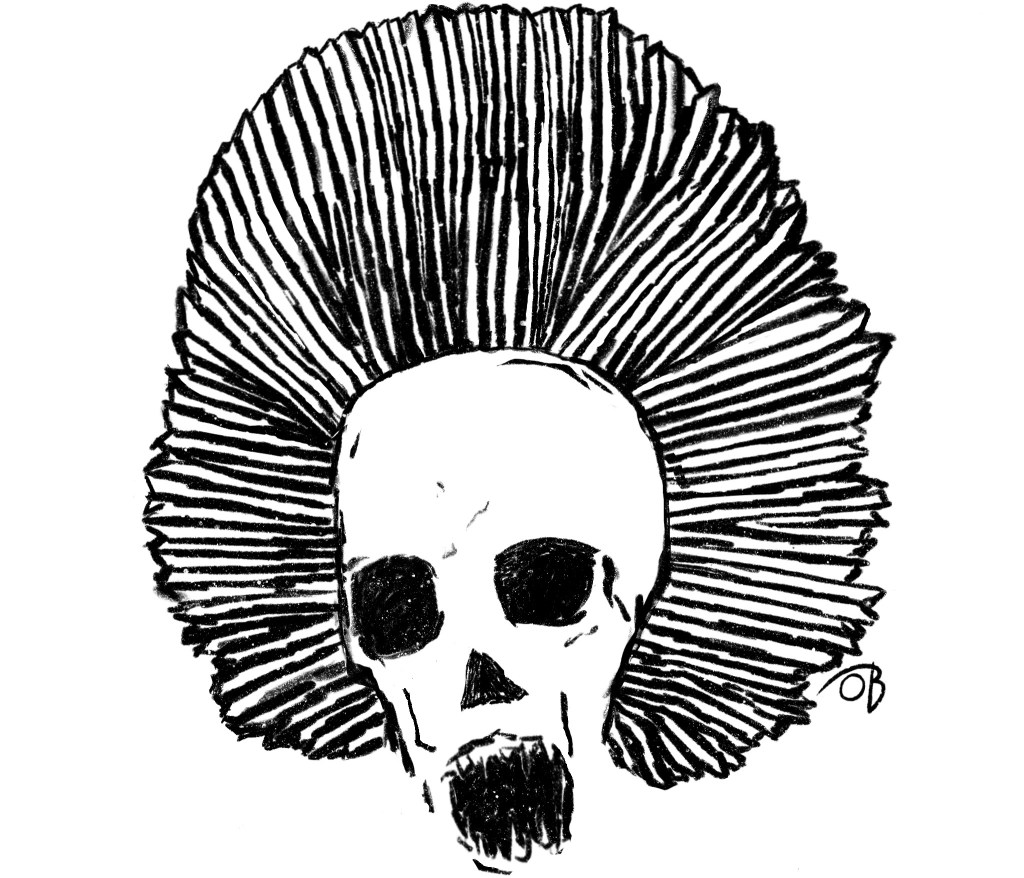
Frankenstein Takes His Milk
One senses del Toro’s readings. Victor Frankenstein would prefer to remain in the Imaginary rather than the Symbolic order, a state of unified egocentrism over fragmenting social entanglement. This is perhaps true of all transgressive figures in the Promethean/Faust lineage who defy the codes and strictures of their societies, but del Toro goes so far as to make a visual gag of it: we never see his Victor (Oscar Isaac) drinking anything other than elegant little glasses of milk, a riff on the maternal unity he strives to reconstitute via mastery over dead flesh. His sin against his own creation, in a major departure from Shelley’s 1818 original, is not disgust at the abject ugliness of the creature (Jacob Elordi) but the tyrannical imposition of his own law and order, his frustration that the creature appears unable to speak anything other than his creator’s name. (This can’t but reflect upon “le nom/non du père” as initiating entry into the Symbolic and confrontation with the reality principle.) For del Toro, Frankenstein’s abhorrence lies in the fact that he takes his milk only to deny it to others.
Any additions made to a text that undergoes adaptation are telling. del Toro adds this detail concerning the Frankenstein family: it has a fortune that has diminished considerably due to a series of revolts on his mother’s inherited plantations. Thus, in order to undertake his experiment — which in this iteration, advanced in time to the mid-nineteenth century, is on the grand scale of mechanized industry and takes place in a Gothic folly on the grand scale of William Beckford’s Fonthill Abbey — Frankenstein needs external funding. Essentially, he’s in search of a good research grant, but banished to the fringes of academic respectability following a botched Elephant Man-style presentation of his early findings, he must rely on a private benefactor. Atlantic slavery and the rise of capitalism are lingering in the background here, more as a ghostly recognition on del Toro’s part than a developed thematics. But the details stand out. As does the director’s compositional style, as much about set design and art direction as cinematography. del Toro, known for his storyboarding, elaborate character biographies, and an aesthetic sensibility that lands somewhere between William Blake and William Morris (with a pulpy dose of EC horror comics thrown in) is operating on pure delight. The film owes its most cinematic horrors to the maturity of that style — in particular, a recurring dream in which Victor is visited by a fiery angel of life and death. The form and figure of the angel may remind us of similar spectacles in Crimson Peak (2015), Pan’s Labyrinth (2006), and even The Devil’s Backbone (2001) — it may also remind us of the apocalyptic visions of M. G. Lewis’s The Monk (1796) — but never has del Toro exhibited such gruesome force as when Victor’s angel removes its mask.
More evidence of del Toro’s readings: he has essentially re-mixed Shelley’s original with elements from a wide range of subsequent stagings and adaptations, from the character shuffle of Richard Brinsley Peake’s Presumption (1823) to the shackles-and-lightning spectacles of James Whale (including a jolt of Whale’s humour) and even an affectionate nod to Kenneth Branagh (Frankenstein naked, muscular, and wet for his crucial discovery of how to impart the “spark” of life). The most compelling inference, in del Toro’s reading of Shelley, is the actualization of what was always an implied possibility in her novel: that, constituted of scientifically/alchemically-resurrected flesh, the creature may be unable to die. Much has been made of the creature’s resolution — promised but never confirmed — to die by throwing himself onto a pyre at the northernmost extremity of the globe at the close of Shelley’s original. How exquisitely painful to imagine that — if we take him at his word — the creature might have attempted this only to discover its impossibility. The persistence of life is terribly sublime. del Toro thus leans into the undead topos of the Romantic age, bringing the creature into closer contact with the pop-existentialist vampires of Anne Rice, whose roots always lay in Byron’s “Fragment of a Novel” (1819) and John William Polidori’s elaboration thereof, The Vampyre (1819). Indeed, Jacob Elordi as the creature, when finally revealed and cast out into his Rousseauvian infancy in the woods, is reminiscent of no one more than Tom Cruise as the vampire Lestat, swamp-bedraggled and cadaverous after his attempted murder by blood-poisoning/exsanguination at the hands of the child-vampire Claudia (Kirsten Dunst) in Neil Jordan’s Interview with the Vampire (1996). Shelley probably would have smiled on all this. Recall Victor’s words:
I considered the being whom I had cast among mankind, and endowed with the will and power to effect purposes of horror, such as the deed which he had now done, nearly in the light of my own vampire, my own spirit let loose from the grave, and forced to destroy all that was dear to me.5
The only really objectionable thing about this film is that the creature isn’t objectionable enough. He kills only in self defence or inadvertently, when tossing aside Victor’s brother, William (played by Felix Kammerer and allowed to reach adulthood in this version), on the night of the latter’s wedding to Elizabeth (Mia Goth). William’s death shortly thereafter from head trauma is hardly commensurate with the malevolent violence of strangling his little boy counterpart in Shelley’s novel, to say nothing of framing the doomed Justine and murdering Clerval and Elizabeth in cold blood. As is his wont — see The Shape of Water (2017) — del Toro loves his monster a little too much, at the expense of the ambiguities that structure Shelley’s novel and are responsible for its many critical and cultural afterlives. We aren’t left with any doubts by the time del Toro tacks on a sentimentalized Byron quotation as the credits roll. But this is besides the point. The real point is the compositional triumph of the creature’s bulk, seen from afar against the dim horizon of the polar desert, his indistinguishable features wrapped in furs, lost in darkness and distance — or maybe another glass of milk.
Black Narcissus (Michael Powell and Emeric Pressburger, 1947)
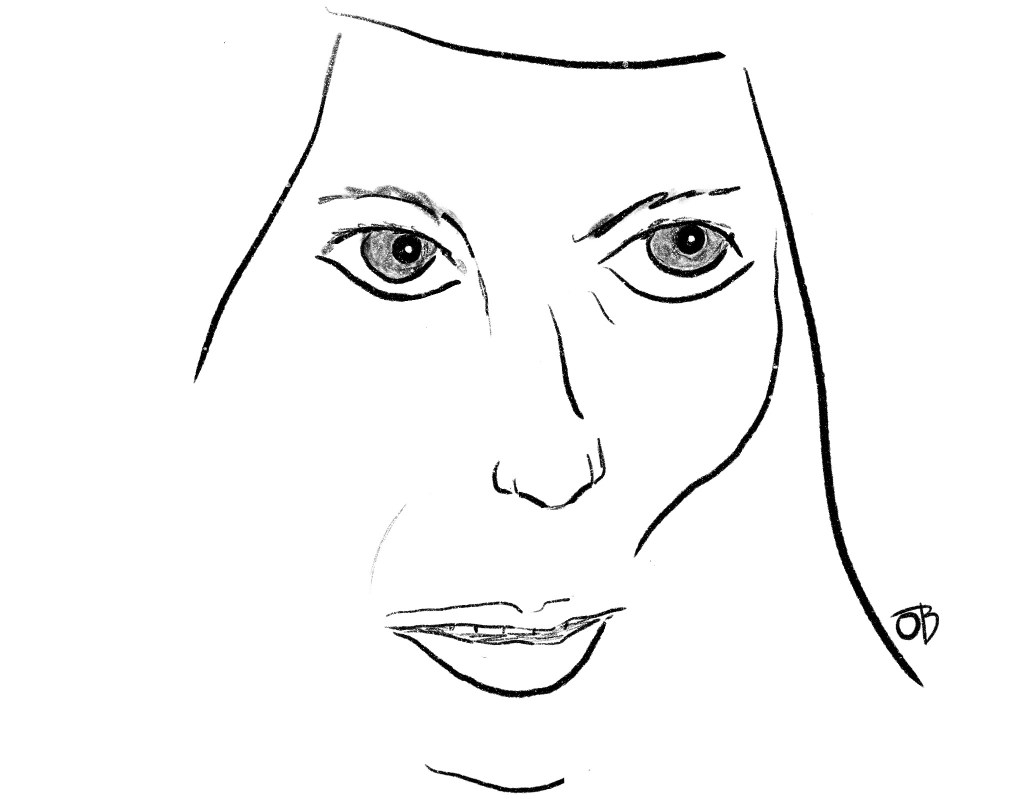
Powell and Pressburger make films of fanatical discipline, extreme dedication. Ballet dancers (The Red Shoes, 1948), serial killers (Peeping Tom, 1960), colonial nuns (Black Narcissus) — in each case we observe consciousness driven to the limits of commitment. The intensity of an obsessive human face is one of their most essential compositional elements, often paired with successive impressionistic explosions of coloured light. In Black Narcissus, the precocious Superior, Sister Clodagh (Deborah Kerr), pursues control relentlessly right up until the moment when, faced with the irrepressible sensuality and murderous disequilibrium of Sister Ruth (Kathleen Byron), she must relinquish it entirely. In the isolation of an Anglican mission in the Himalayas, everything slips at the borders of authority, until the eruption of the Gothic — a variation of the conventual Gothic, no less, that mainstay of eighteenth-century British romance — spells the end of all illusions. That is, only when aesthetic fantasy reaches its height does illusory restraint collapse; the more camp and hyperbolic the performances and compositions, the closer we are to the denied reality of sensuous humanity and its overflows. The sleep of reason indeed produces monsters.
Weapons (Zach Cregger, 2025)

As its title indicates, and its witchcraft plot enacts, the film concerns the transformation of human beings — especially children — into tools of destruction. One senses a commentary upon ideology in the internet age, though the precise ideology and its position on the political spectrum is amorphous. In its most overt instance of symbolism, when a dreaming, bereaved father (Josh Brolin) sees a monumental assault rifle hovering over a copy of his own suburban house, marked by the time at which his child disappeared along with all but one of the students enrolled in the same elementary school classroom, Weapons inevitably evokes the school shooting epidemic that has become part and parcel of twenty-first-century American life. But such symbolism is overdetermined, and the significance of weaponry, mechanized or otherwise, is not reducible to any one spectacle of violence. Aunt Gladys (Amy Madigan), the film’s antagonist, looks and acts as though she stepped out of a John Waters film. Her conspicuous non-normativity, however, belies her alignment with systems of regulation, or at least the essential regulatory principle. We are dealing here with the sites and symbols of social control: schools, police, town infrastructure, the house, the doorbell camera with all its implications of surveillance, and finally, most importantly, the human body. As in his previous film, Barbarian (2022), Cregger fixates upon the devolution of the normative into the “barbaric” (a word that should never go unaccompanied by double inverted commas and is, among other things, loosely synonymous with “Gothic”): how a mother or father or daughter or policeman or school principal can degenerate into raving figures of violent frenzy. And both films suggest that manipulation, coercion, imprisonment, rape — in a word, dominative acts — effect this degeneration. That is to say, not only is the dominative act itself “barbaric” in character, but generates repeating patterns of increasingly spectacular violence. Control is a reproductive weapon.
Works Cited
- James Cain, The Postman Always Rings Twice, Double Indemnity, Mildred Pierce, and Selected Stories (New York: Everyman’s Library, 2003), 236. ↩︎
- Cain, 495. ↩︎
- Cain, 351. ↩︎
- Cain, 351. ↩︎
- Mary Shelley, Frankenstein; or, The Modern Prometheus, ed. Susan J. Wolfson (New York: Pearson Longman, 2007), 54. ↩︎
 OLIVER BEDARD